Kling 3.0 — The Winning Approach
01 — Locked-off living room, night
02 — 15s with beat-by-beat action timing
03 — 45° diagonal sofa + phone-stays-black continuity
04 — Direction-locked composition + real fabric sofa
05 — Softened composition + photoreal face/hands quality block
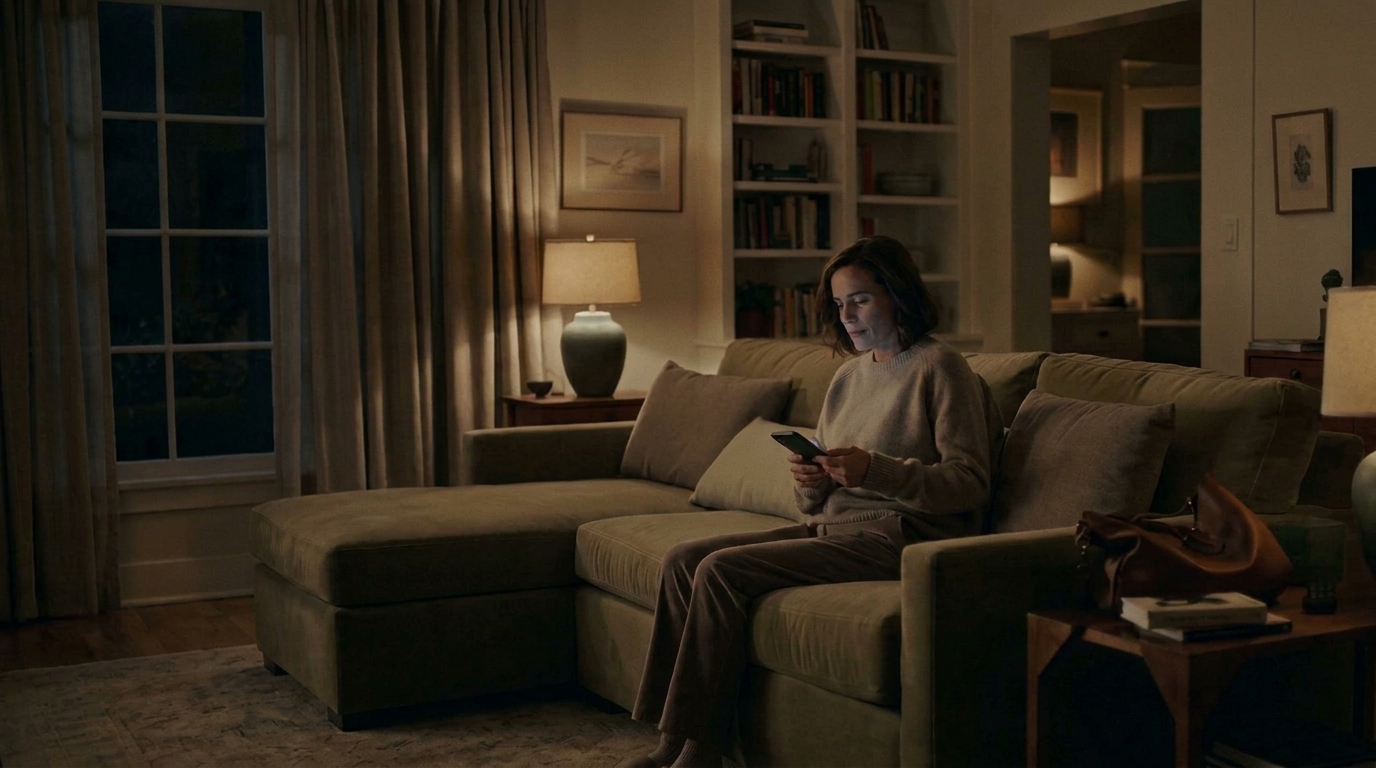
Still 01 — Start-frame regeneration from Hassan's reference
Native-resolution recreation of a reference frame, produced to feed Kling's image-to-video pipeline as a start_image. Known deltas vs. reference: slightly more frontal pose, faint smile, extra foreground lamp on the right.
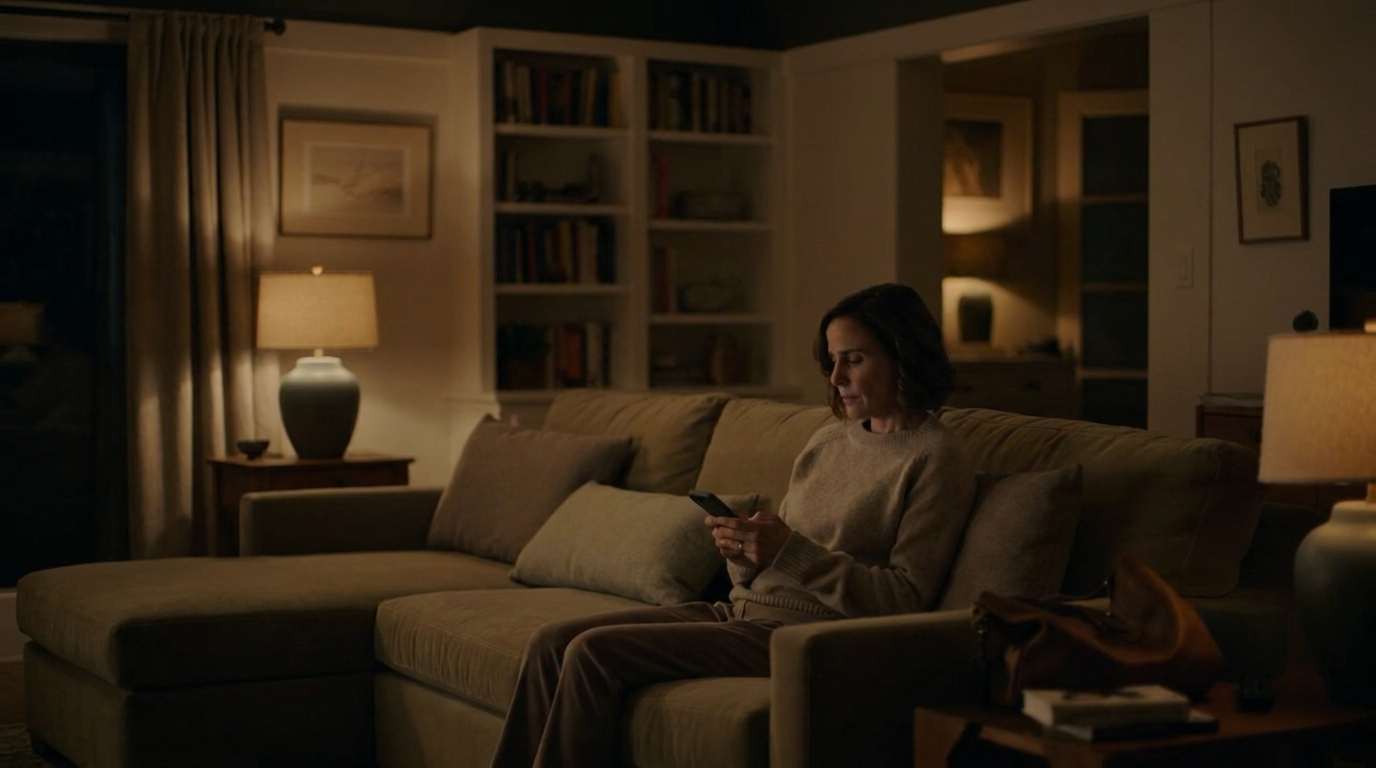
Still 02 — Dark grade + subject moved right
Second reference regeneration — kept the exact dark tungsten grade and deep shadows from a darker, centered reference, reframed wider with the woman in the right third. Superseded: colors still off vs. target.
06 — Image-to-video from hi-res frame, PRO 1080p
Verdict: really strong; only flaw was a split-second screen blink mid-shot, plus a request for fuller right-to-left swipes.
07 — Flicker fix: two-state screen rule + full-width swipes
Verdict: artifact-y; phone wedged on the arm side, still lit.
08 — Placement emphasis + anti-artifact language
Verdict: "camera shake" — diagnosed as a hidden 15% push-in zoom plus drift. Phone still on the arm side. A tripod-locked local variant was produced at ~13% framing cost.
09 — 4K, no-lock beats, hard anti-zoom language
Steadiest camera of the batch (~3.2% drift); lock beat removed. Phone near the arm (viewer's right) — Hassan clarified the phone must end on her right / viewer's left. "v9 was perfect otherwise."
10 — Placement in frame coordinates: correct side, mild drift
Phone correctly ends left-of-frame, but camera drift returned (~4%). Lesson: never mix "her left" with "screen-left" — subject-relative and frame-relative directions are opposite here.
11 — Exact v9 prompt + "beside her, to her right"
Placement correct (phone ends left-of-center on the seat cushion, visible in the final hold), but this roll drew a 36% push-in over the shot — the identical prompt produced 3.2% drift in v9, confirming drift is stochastic per roll rather than prompt-controllable. A tripod-locked 1080p post was produced locally as a stopgap.